

TIENDA
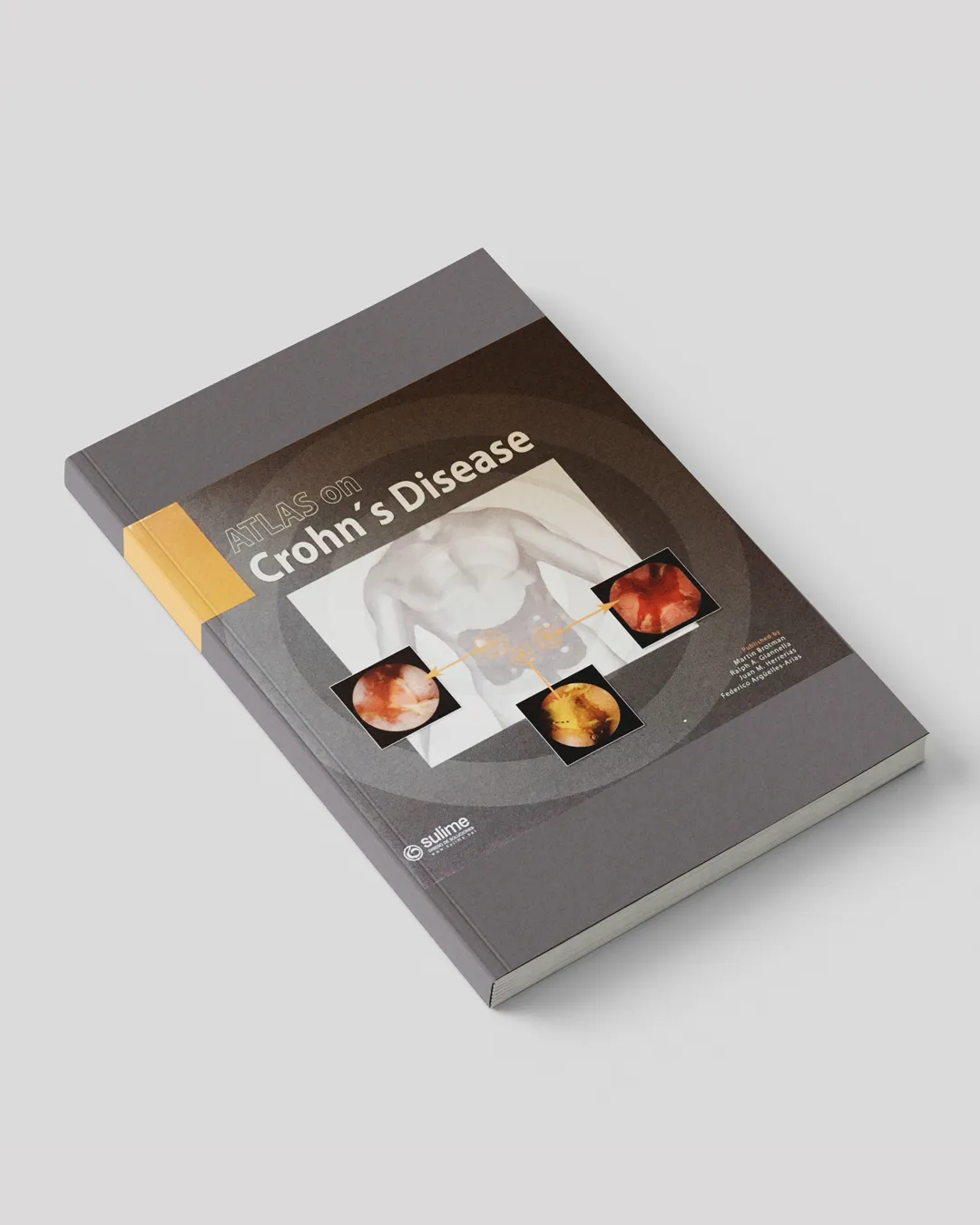
Atlas on Crohn's disease
Inflammatory bowel diseases, and particularly Crohn's disease (CD) are very challenging issues for clinicians. We live in a quickly changing world, and patients ask us not only for help but for personalized and effective treatment. But every clinician knows that the most difficult task is diagnosis. And if diagnosis is never a simple word, in Crohn's disease it's a really complex one. To choose the treatment (or even no treatment) you need to have clear responses to several questions: is Crohn's disease the reason for symptoms? which is the anatomical site(s) affected? is there activity of the disease? are there local and/or systemic complications? is the mucosa really healed?. Not many years ago conventional barium based radiology was the main test helping the clinician to get responses. But in the last 40 years endoscopy has assumed the main role in the diagnostic process. First optic endoscopy developed after Hirschowitz's genial translational brain, then videoendoscopy followed, and in the last few years enteroscopy, capsule endoscopy, and many other techniques are being developed. And when endoscopy seemed to be the clear winner, ultrasonography refinements and specially new nuclear magnetic resonance protocols and techniques are opening completely new avenues for diagnosis and follow up of CD.
Images are more and more important. The pace of changing is so quick that the person that in real practice has to fulfill the complex puzzle of diagnosing CD, the clinician, is completely puzzled. There are some excellent texts on IBD, but sometimes text should be read literally: words, more words, but few demonstrative figures. This excellent Atlas tries to do the contrary: simple, quick to read and understand texts but many demonstrative and clear figures. From conventional endoscopy to enteroscopy, from biopsy to capsule, from adult to children, different topics are covered with a main character: image. We are mainly clinicians that face every day the difficult task of treating CD. Yes, we have new drugs, but they cost money and have risks. Yes, we may think we know the status of a patient. But we need objetive data, and images are basic to evaluate CD. We think this new, excellent book will help the clinician to see part of the complexities of CD. The hard work of Professor Herrerias and so many colleagues will undoubtfully help us and, most importantly, help our patients.
Joaquin Hinojosa and Fernando Gomollón
President and Vicepresident of GETECCU